

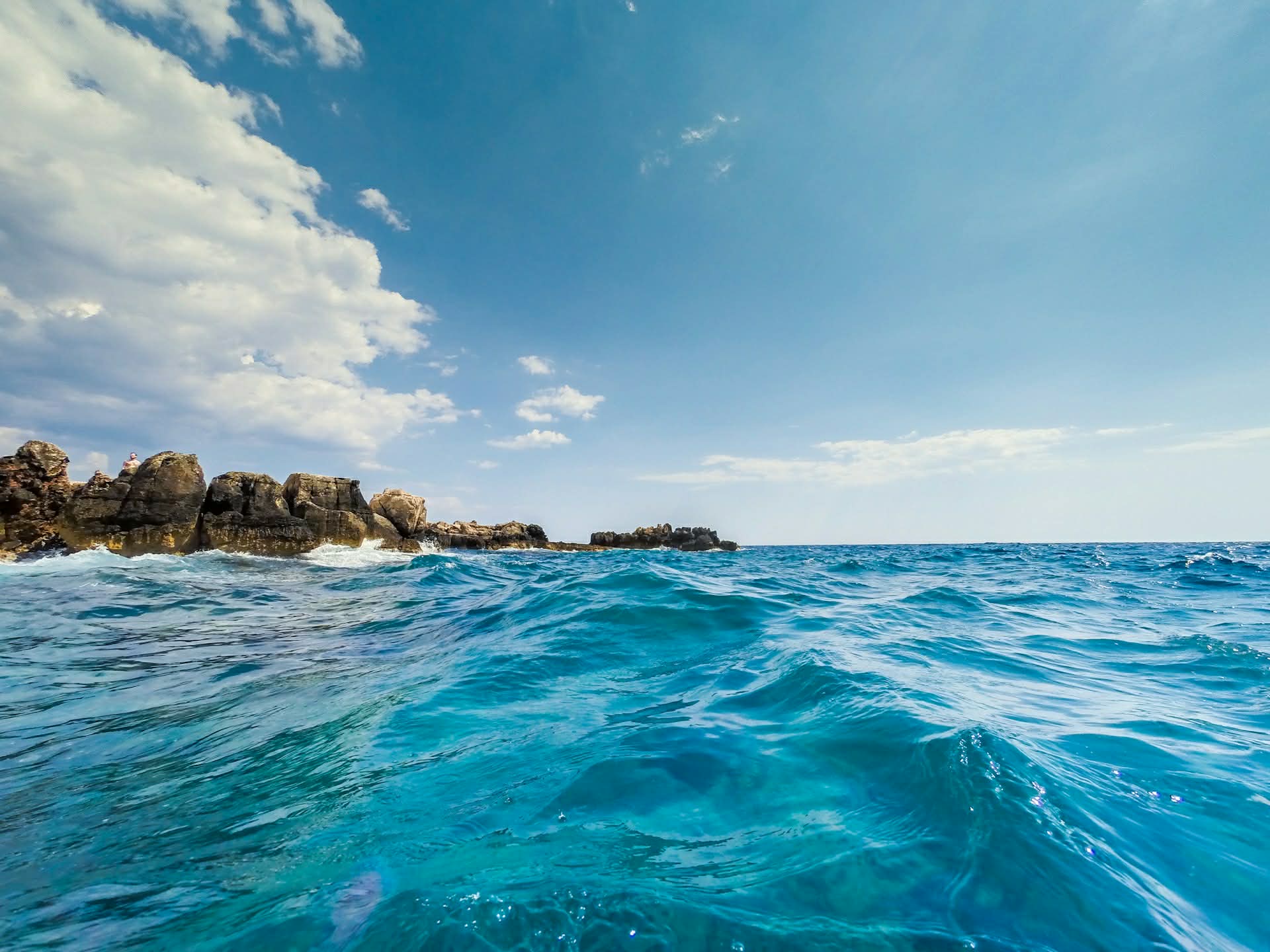
Where granite meets blue and the sea sets its own rhythm.
The Greek seas are shaped by rock, light and history. But in the northern Aegean — around Halkidiki and Ammouliani — the character of the sea becomes something more intimate.
Here, granite formations continue beneath the surface, forming natural walls, plateaus and gentle slopes that create protected dive environments. The coastline is fragmented into bays and coves, meaning conditions can remain calm even when open sea areas are affected by wind.
Visibility is often exceptional, frequently exceeding 25–30 meters. Currents are generally mild, allowing for relaxed dives with stable profiles. The Mediterranean here is clear, structured and beautifully predictable — yet never repetitive.
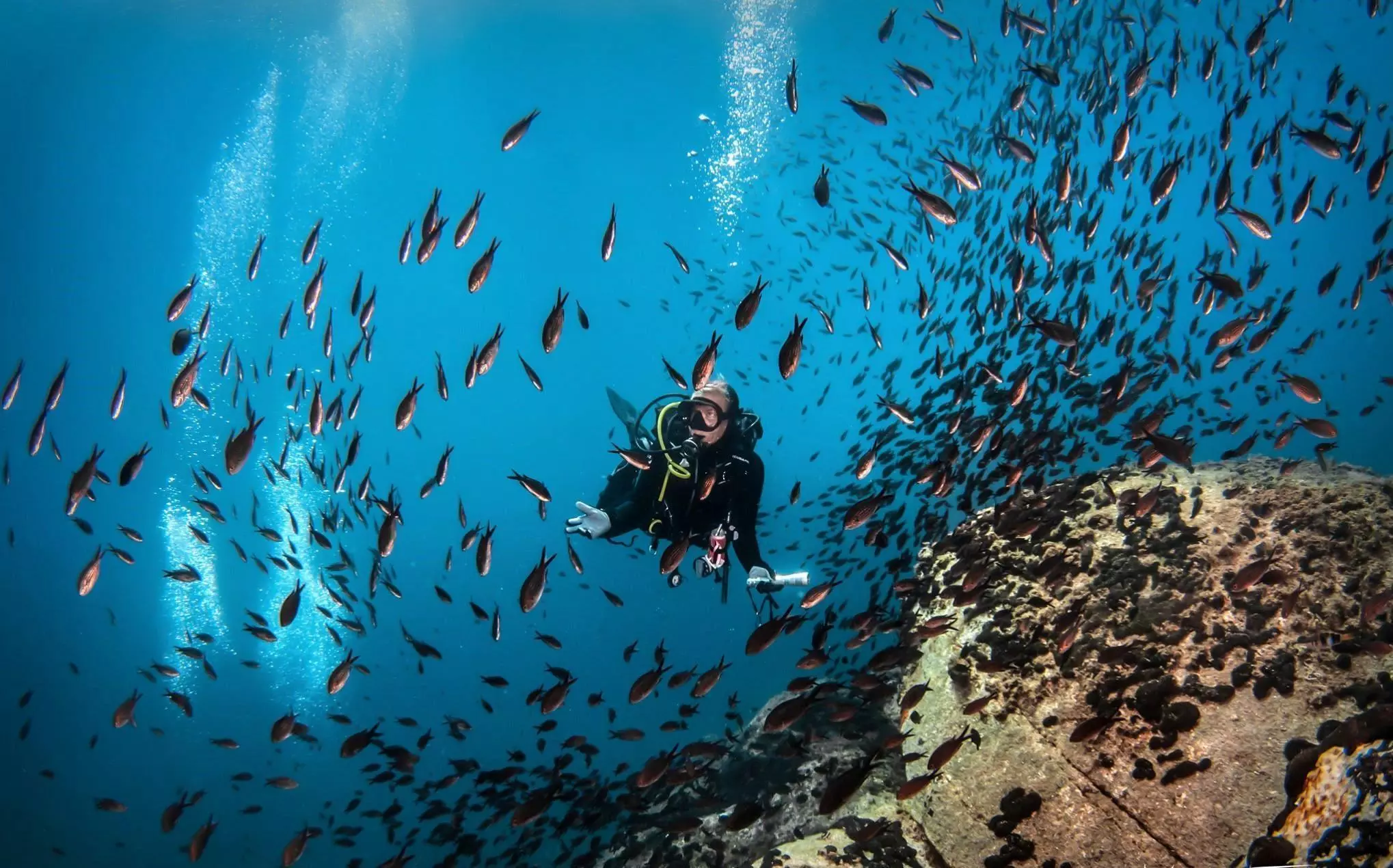
Diving Conditions at a Glance
Calm seas, excellent visibility and predictable profiles define diving around Ammouliani and Halkidiki.
• Visibility: 25–30 meters
• Currents: Mild
• Water temperature: 16°C – 29°C
• Suitable for: First-time divers and certified explorers
These natural conditions allow relaxed dives, longer bottom times and enjoyable underwater exploration throughout most of the season.
Above the surface, the landscape is mountainous. Below it, the terrain mirrors that rugged beauty — rock formations, crevices, ledges and sponge-covered reefs full of Mediterranean marine life.
Water temperatures range from approximately 16°C in spring to 28–29°C in late summer. September is often the warmest and calmest month, with excellent clarity even at depth.
Marine life reflects this balance of structure and stability. Groupers rest along the walls, octopus blend into granite cracks, amberjack appear unexpectedly from the blue, and nudibranchs quietly decorate the reefs with remarkable detail.
For over two decades, we have been diving these waters daily — observing how light changes across seasons, how marine life shifts, and how each site reveals a slightly different character depending on the day.
These are not simply “diving conditions.” They are the waters we know intimately — and the ones we call home.